Yes, Wabi-Sabi art can absolutely be figurative. While many people associate the philosophy strictly with abstract textures or rustic pottery, figurative Wabi-Sabi art has the ability to portray human vulnerability, emotion, and the natural process of aging. When applying Wabi-Sabi to the human form, artists strip away idealized proportions and polished realism in favor of raw, emotive, and incomplete interpretations:
How Figurative Art Embodies Wabi-Sabi
Deconstructed and Abstracted Silhouettes: Human figures are often reduced to simple, elongated, or gestural forms. Omitting fine details like facial features shifts the focus entirely to the mood, posture, and emotional weight of the piece.
Raw, Earthy Textures: Sculptures are frequently made from unglazed clay, rough plaster, or heavily grained wood. Visible chisel marks, cracks, and uneven surfaces symbolize the weathering effects of time and life on the human body.
Themes of Impermanence and Solitude: Paintings and sculptures often depict singular figures in moments of quiet contemplation, rest, or sorrow. This directly reflects the traditional Zen roots of wabi(solitude/simplicity) and sabi (the grace of aging).
Incomplete Portrayals: Fragmented figures—such as a solitary torso, intertwined hands, or overlapping facial outlines—embrace the philosophy that beauty exists in things that are partial, broken, or evolving.
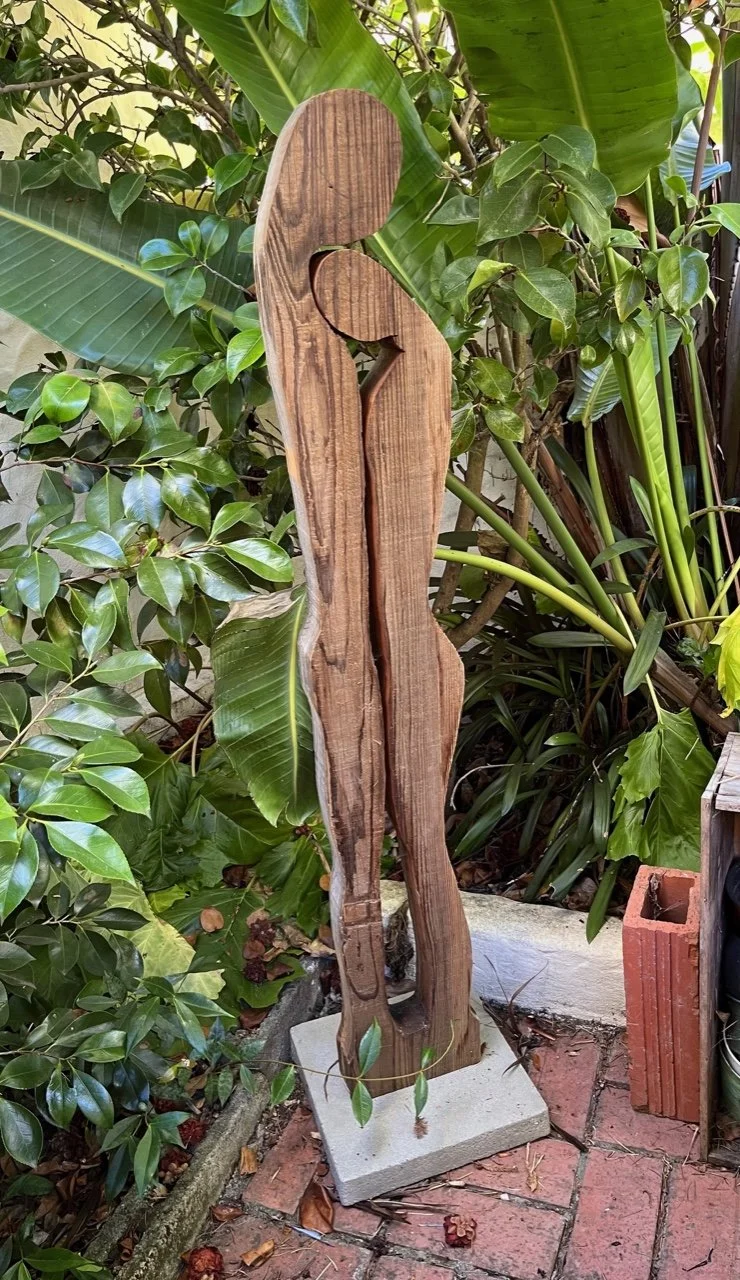
Figurative Wabi-sabi sculpture made from reclaimed wood: Together
Interior designers often use these evocative, understated figures to anchor minimalist spaces. They provide an intimate, human element without disrupting the overall calm of a room.