A fresco painting is a mural technique where an artist applies water-based earth pigments directly onto wet lime plaster. As the plaster dries, a chemical reaction (carbonation) fuses the pigment into the wall, making the artwork a permanent part of the limestone surface. That is the reason while those hundred and thousand year old frescos are so well preserved - they are literally in the stone. The word "fresco" comes from the Italian word for "fresh" - meaning you paint into the fresh plaster.
Key Techniques
Buon Fresco: The "true" fresco method involves painting on wet plaster. No extra glue or binder is needed because the drying lime locks the color in place through a chemical reaction. The color pigment become part of the lime stone during the carbonation process.
Fresco Secco: This method involves painting on dry plaster using pigments mixed with a binding agent like egg yolk or glue. It is less durable than buon fresco, because it washes off or can easily be scratched off.
History and fame of fresco paintings date back to ancient times, with famous examples in Italian palaces and Roman ruins like Pompeii. The technique reached its peak during the Italian Renaissance. Masterpieces like Michelangelo's ceiling in the Sistine Chapel use the buon fresco method. However, equally impressing are the everyday frescos you can see on house walls while walking through the streets of Italian villages, such as the one below I saw in Feltre, Northern Italy. What is also interesting about these “everyday” frescos is that they often (sadly) got over-frescoed - meaning, that somebody (hundred of years ago) roughened up the surface and applied new lime plaster on top and then painted a new fresco. You can see that on the lower part of the wall below or check out this layering on one of my fresco paintings on a tile. Even when hidden, these layers of frescos preserve some of the history of those places - political, social or artistic.
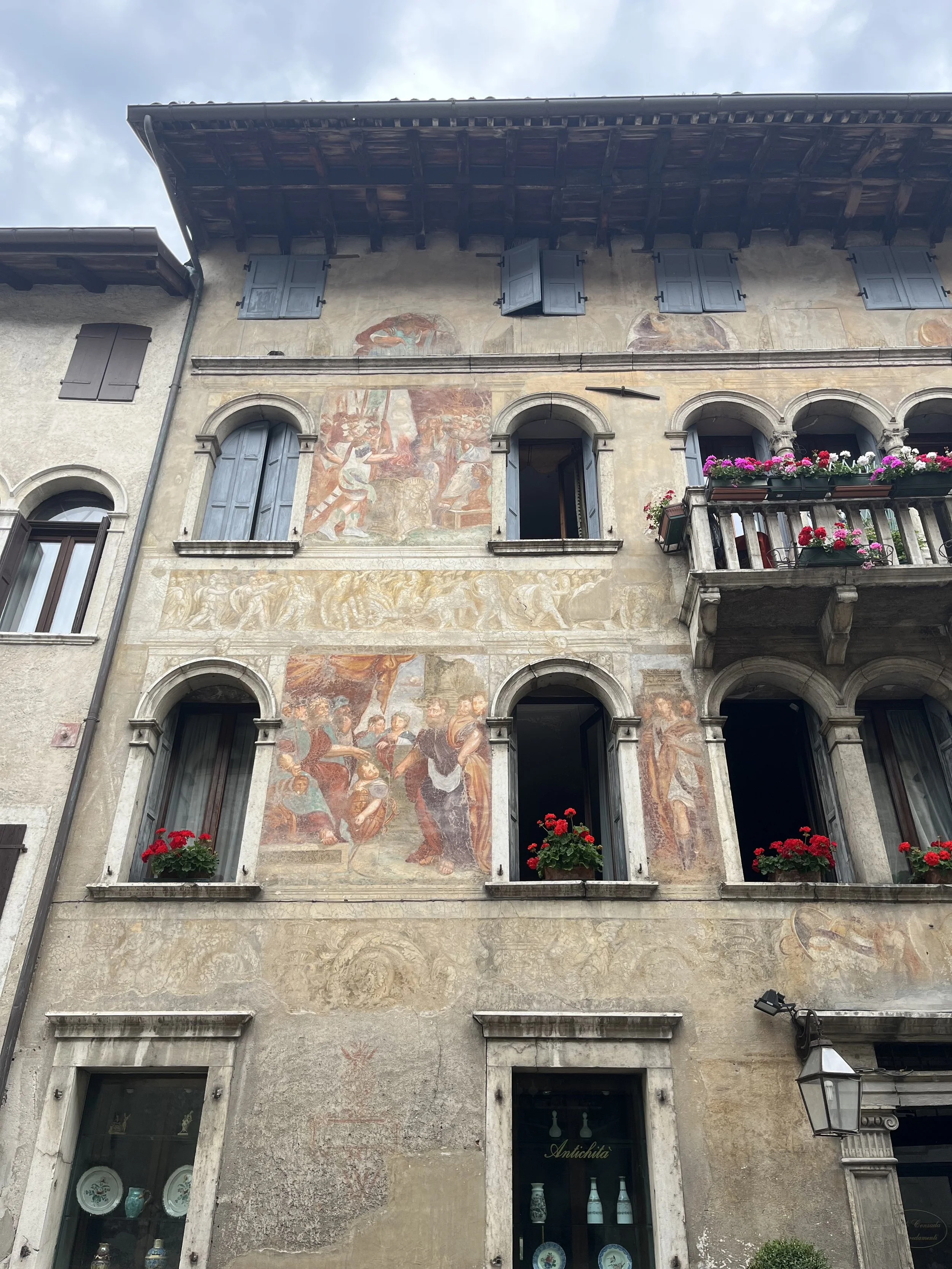
Also, fresco paintings are not only painted on walls, they can be painted on wall fragments, panels, tiles or even burlap on wood. This process of creating “mobile” frescos is what I currently explore. That way you can have your own fresco in your home without having to paint the whole wall. Next time you see a fresco, look closely to see the brush stroke, the pigments and the lime plaster with sand - it is fascinating how “earthy” it looks and feels (please, never touch a fresco you do not own).