What is Wabi Sabi Style?

Wabi-sabi art is a Japanese aesthetic and artistic philosophy that centers on the acceptance of imperfection. When used in design or art as a style, the goal is to create beauty, authenticity, and elegance with design elements, art pieces and sculptural objects that are imperfect, impermanent, and incomplete. Often with a deep connection to nature.

Here are some principles of Wabi-Sabi:

  • Impermanence: Everything is in the natural and beautiful cycle of constant change, aging, and wearing down

  • Asymmetry: Rejecting strict geometric symmetry

  • Irregularity: Favoring organic shapes, accidental brushstrokes, and random carving

  • Simplicity: Revealing the pure essence of a material or object without clutter

  • The Beauty of Age: Honoring the marks of time, such as weathered wood grain, fading colors, or cracks.

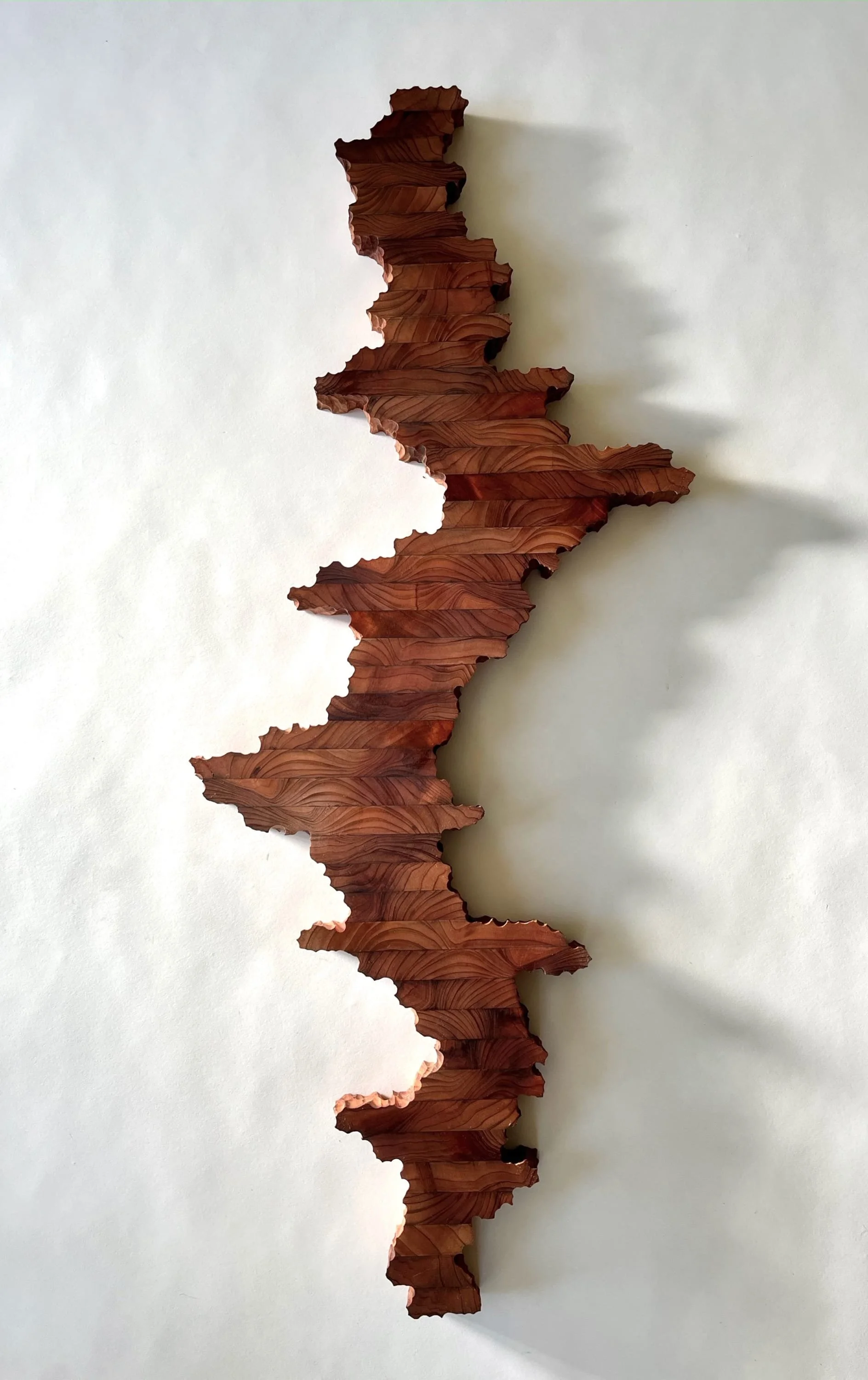
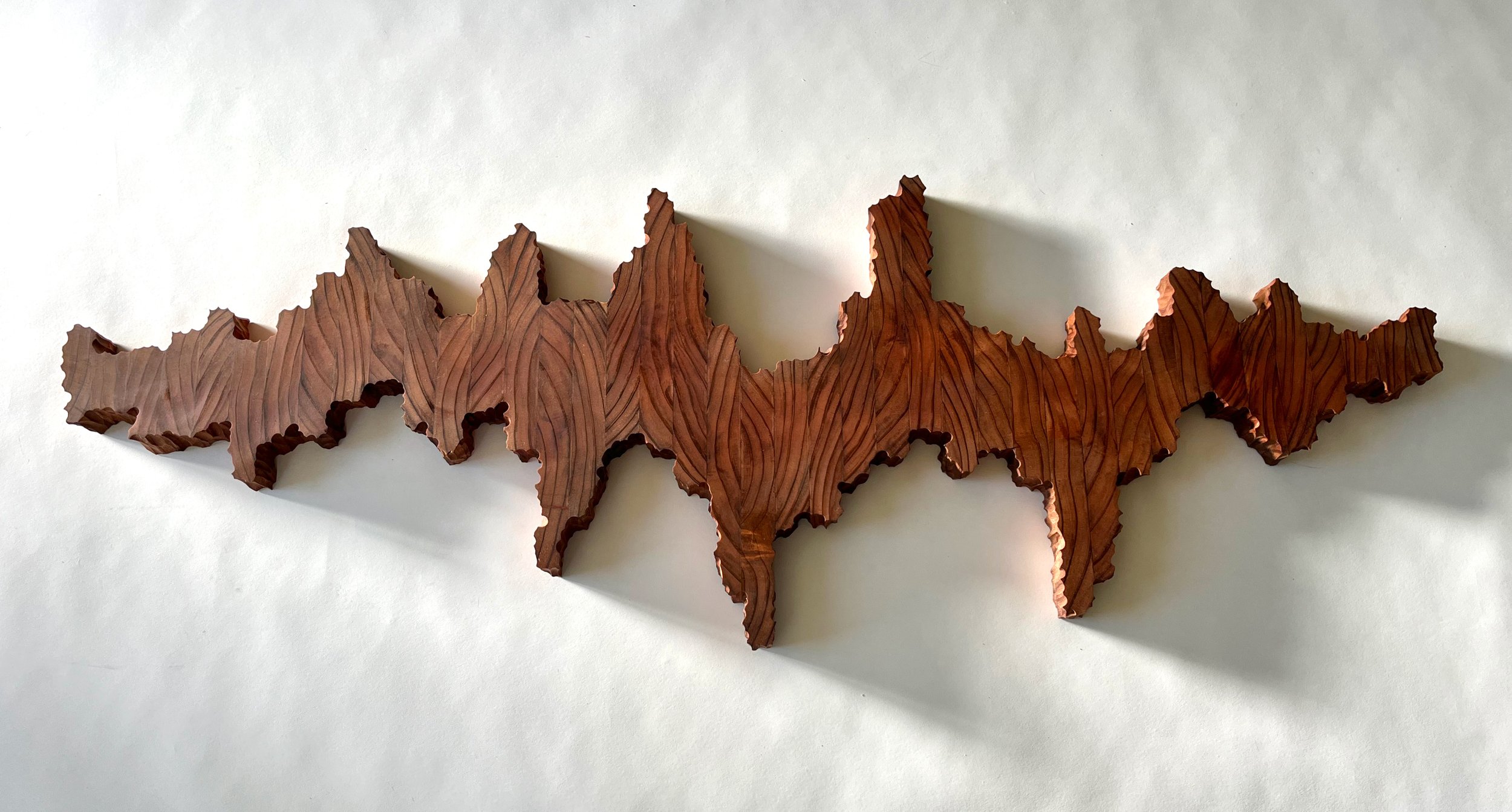
Wabi sabi inspired wood wall art: Erosion

Wabi Sabi Wood Art and Sculptures

Wabi-Sabi wood art is highly prized by designers because wood is the ultimate canvas for showing time, weathering, and nature. Wood inherently embodies the core principles of Wabi-Sabi: transience, imperfection, and organic history.

What makes wood so interesting for wabi-sabi:

  • Celebrates natural flaws: Instead of discarding wood with knots, deep cracks, erratic grain lines, or wormholes, artists highlight these elements as the main features.

  • Utilizes live edges and grain of wood: Sculptures and wall panels often keep the natural surface of the old wood, while also highlighting the grain (growth lines) of the wood.

  • Emphasizes aging and texture: Weathered driftwood, reclaimed barn wood, and charred wood (using the Japanese Shou Sugi Ban technique) showcase a rich patina that cannot be replicated by machines.

Here is how wabi-sabi has inspired my work with wood:

  • Emphasis on natural grain lines - flowy asymmetry of various grain lines, repressing the age of the wood, but also the natural beauty

  • Lamination of wood pieces - highlight the glue lines that brought individual wood pieces together to form the overall sculpture (similar to golden joinery of ceramic bowls)

  • Inclusion of imperfection like knots, cracks, nail holes and discolorations - imperfectly perfect

  • Finish with linseed oil to preserve natural wood colors - warmth of natural wood

  • Shapes inspired by nature - asymmetrical and randomly flowing

Actually the last one is the most difficult. When creating a piece our human instinct (or education) wants us to make straight lines, round circles and symmetry. Therefore, I always have to “let go” when making a piece that looks not “human made”, so it looks like found in nature, created by natural forces, such as water, wind, sun, etc.

Examples of wabi-sabi sculptures using reclaimed redwood

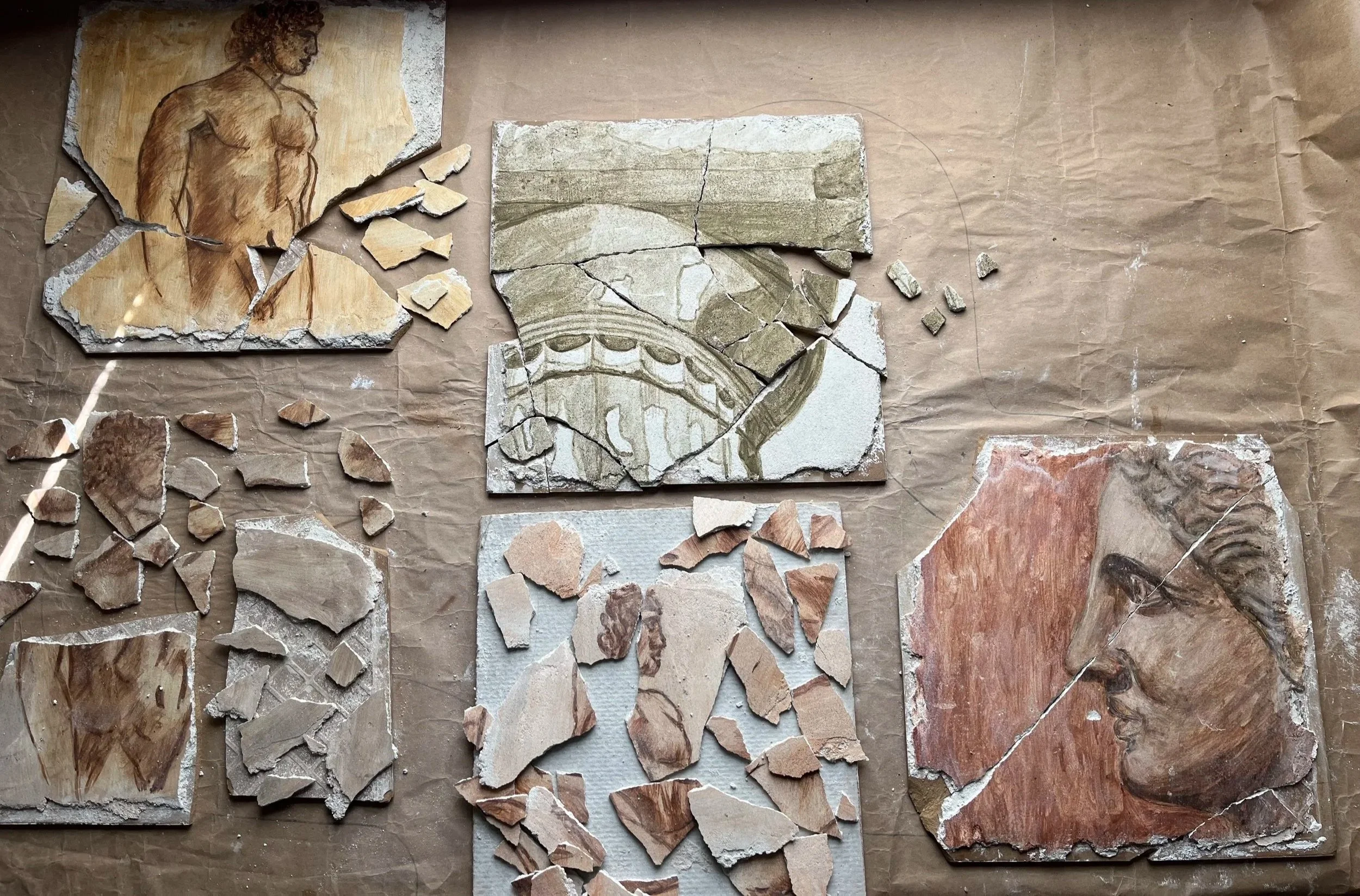
Fresco Fragments - inspired by visits to Pompeii and an earthquake

When visiting Pompeii several years ago I was fascinated by the numerous fresco walls and fragments that survived a major vulcano eruption and weathering of thousand of years. Especially the fragments caught my attention because they paint a picture of the life in Pompeii while also leaving room for your own imagination (because we really don’t know how they lived back then). But you get a glimpse of it. This inspired me to not just paint in fresco, but also create fragments, broken pieces and layered pieces.

In addition, there was one other event that brought me to fragments. I had started to paint frescos on ceramic tiles and then an earthquake hit the Bay Area. My fresco tiles (which I had only lean against the wall without hanging hardware) came down and broke in several (and hundreds) of pieces. Initially, I felt heartbroken, but then I realized that this is an opportunity to work with it - to create something special. I decided to rescue some of the fragments and put them together like a puzzle (similar to the restored pieces I saw in the Pompeii museum area). Then I used broken clay tile as my canvas and also painting frescos with then intention to break them later (with I did). A whole new series evolved “frammenti” (italian word for fragmented).

And here is why I am so fascinated by “frammenti” frescos:

  • The (incomplete or broken) artwork leaves room for imagination - what do the missing pieces look like, why did it break…?

  • The art connects the old (broken, ancient technique, weathered,…) with the new (today’s view of things, role of art in our lives, …)

  • The fresco fragments also follow the wabi-sabi tradition I use in my other sculpture work - impermanence, imperfect, …

  • The process is sculptural in nature: What shape, several layers, where do I break, how to mount the pieces, …?

  • It’s like life - aren’t we putting pieces together (or fix broken “pieces”) everyday to lead a more joyful, meaningful, fulfilled life…?

Fresco Fragments - my fresco paintings on tiles were “fragmented” by an earthquake

If you want to see what I did with the fragments from above, and how I put them together, please take a look at the Fresco Fragments (frammenti) series.

What are Fresco Paintings?

A fresco painting is a mural technique where an artist applies water-based earth pigments directly onto wet lime plaster. As the plaster dries, a chemical reaction (carbonation) fuses the pigment into the wall, making the artwork a permanent part of the limestone surface. That is the reason while those hundred and thousand year old frescos are so well preserved - they are literally in the stone. The word "fresco" comes from the Italian word for "fresh" - meaning you paint into the fresh plaster.

Key Techniques

  • Buon Fresco: The "true" fresco method involves painting on wet plaster. No extra glue or binder is needed because the drying lime locks the color in place through a chemical reaction. The color pigment become part of the lime stone during the carbonation process.

  • Fresco Secco: This method involves painting on dry plaster using pigments mixed with a binding agent like egg yolk or glue. It is less durable than buon fresco, because it washes off or can easily be scratched off.

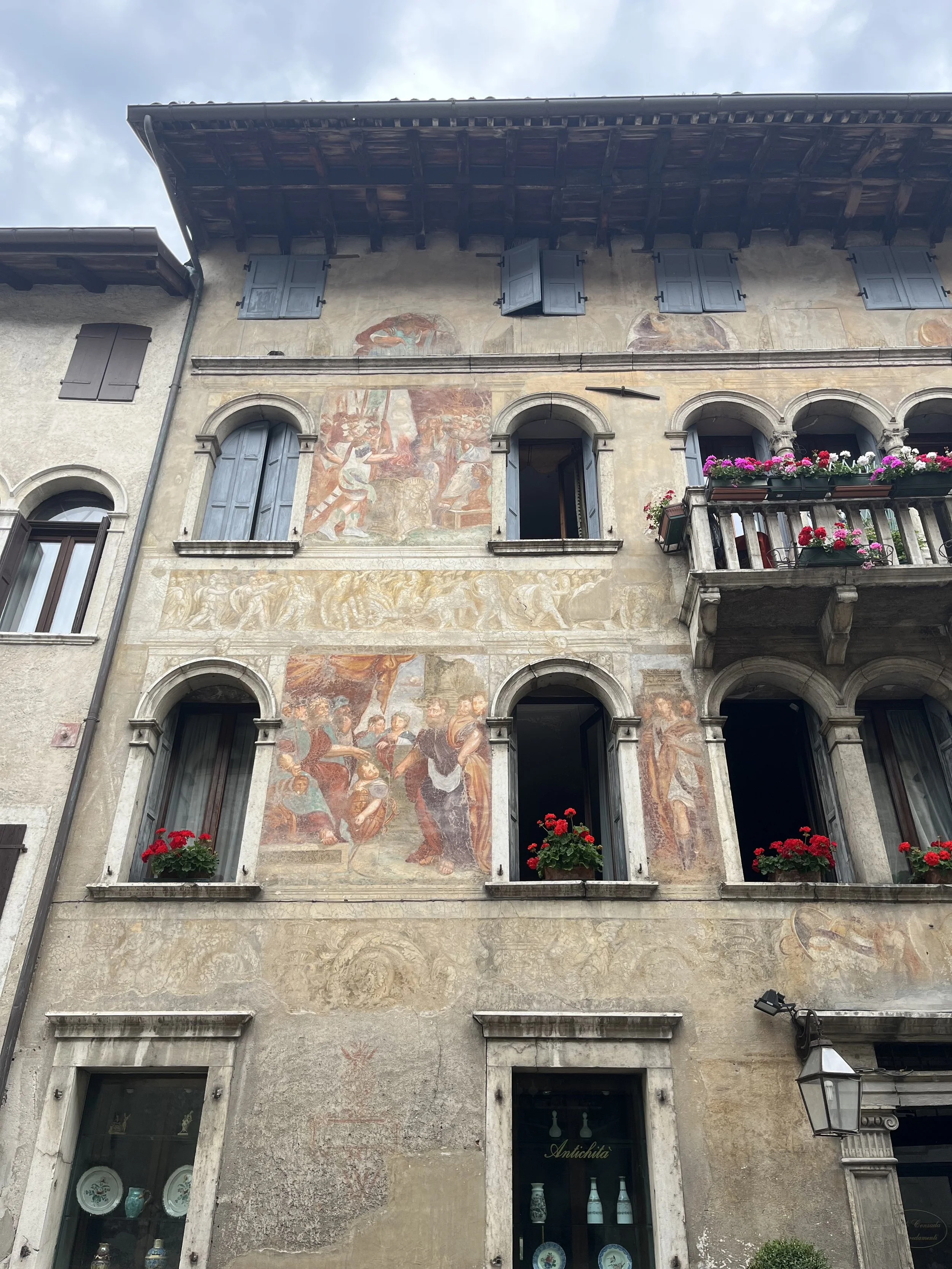
History and fame of fresco paintings date back to ancient times, with famous examples in Italian palaces and Roman ruins like Pompeii. The technique reached its peak during the Italian Renaissance. Masterpieces like Michelangelo's ceiling in the Sistine Chapel use the buon fresco method. However, equally impressing are the everyday frescos you can see on house walls while walking through the streets of Italian villages, such as the one below I saw in Feltre, Northern Italy. What is also interesting about these “everyday” frescos is that they often (sadly) got over-frescoed - meaning, that somebody (hundred of years ago) roughened up the surface and applied new lime plaster on top and then painted a new fresco. You can see that on the lower part of the wall below or check out this layering on one of my fresco paintings on a tile. Even when hidden, these layers of frescos preserve some of the history of those places - political, social or artistic.

Also, fresco paintings are not only painted on walls, they can be painted on wall fragments, panels, tiles or even burlap on wood. This process of creating “mobile” frescos is what I currently explore. That way you can have your own fresco in your home without having to paint the whole wall. Next time you see a fresco, look closely to see the brush stroke, the pigments and the lime plaster with sand - it is fascinating how “earthy” it looks and feels (please, never touch a fresco you do not own).

Why Interior Designers choose Wabi-sabi art

Wabi-Sabi art is highly sought after by interior designers who want to add organic warmth, texture, and emotional depth to modern spaces. They often choose Wabi-Sabi Art for the following reasons:

  • Breaks up sterile geometry: Clean lines and smooth, hard surfaces in modern rooms can feel cold. Imperfect, textured art introduces a nice balance.

  • Creates a calming atmosphere: Muted earth tones, soft flowing lines, natural materials and asymmetrical designs promote tranquility and mindfulness.

  • Values authenticity over gloss: Handcrafted, sustainable pieces replace mass-produced decor with unique character.

  • Thrives on negative space: Expansive, minimalist pieces act as visual breathing room in luxury homes and wellness spaces.

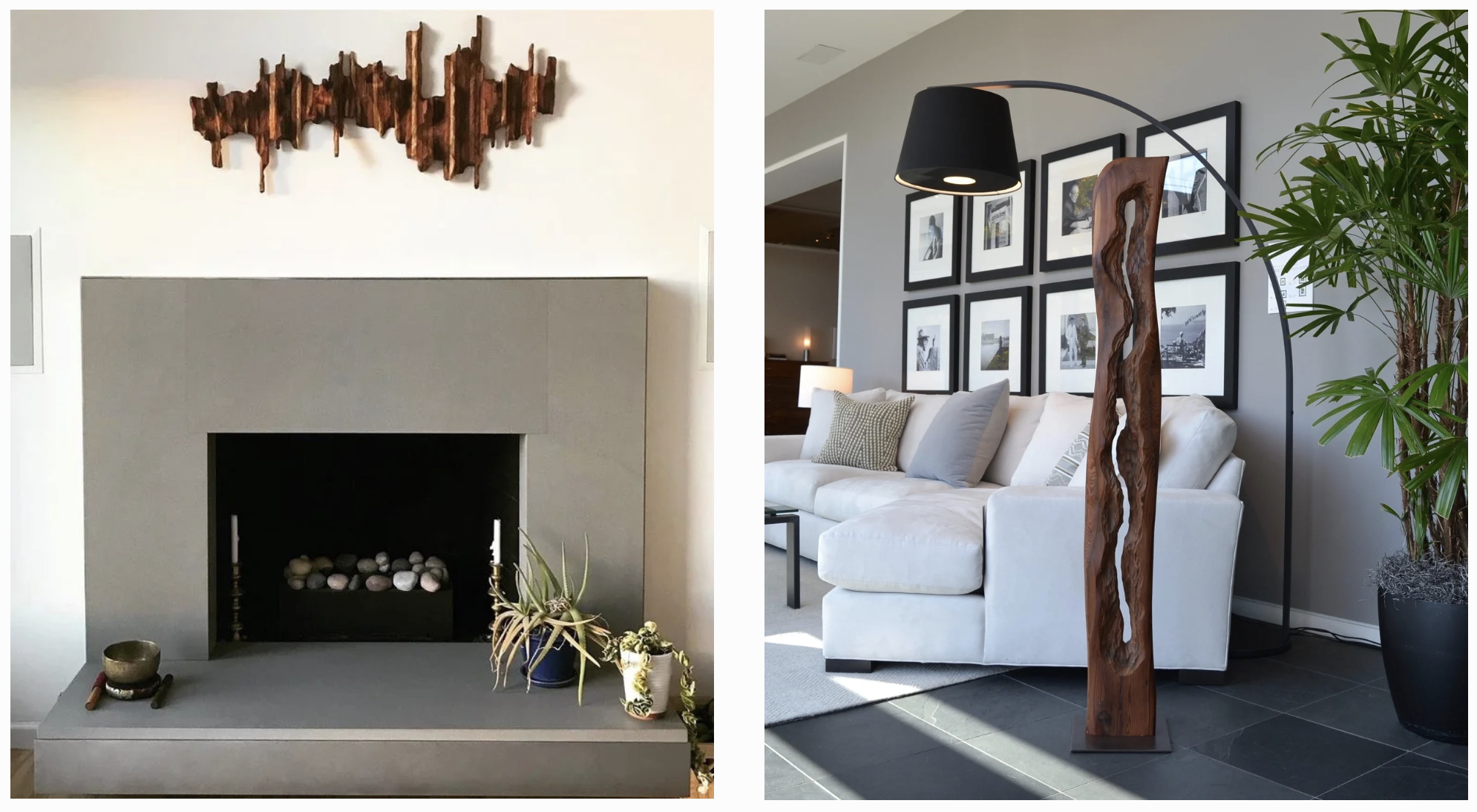
Here are some examples of artworks in modern spaces that add warmth, flow, tranquility and natural texture.

Wabi-sabi wood art for interior design projects

Can Wabi-sabi art be figurative?

Yes, Wabi-Sabi art can absolutely be figurative. While many people associate the philosophy strictly with abstract textures or rustic pottery, figurative Wabi-Sabi art has the ability to portray human vulnerability, emotion, and the natural process of aging. When applying Wabi-Sabi to the human form, artists strip away idealized proportions and polished realism in favor of raw, emotive, and incomplete interpretations:

How Figurative Art Embodies Wabi-Sabi

  • Deconstructed and Abstracted Silhouettes: Human figures are often reduced to simple, elongated, or gestural forms. Omitting fine details like facial features shifts the focus entirely to the mood, posture, and emotional weight of the piece.

  • Raw, Earthy Textures: Sculptures are frequently made from unglazed clay, rough plaster, or heavily grained wood. Visible chisel marks, cracks, and uneven surfaces symbolize the weathering effects of time and life on the human body.

  • Themes of Impermanence and Solitude: Paintings and sculptures often depict singular figures in moments of quiet contemplation, rest, or sorrow. This directly reflects the traditional Zen roots of wabi(solitude/simplicity) and sabi (the grace of aging).

  • Incomplete Portrayals: Fragmented figures—such as a solitary torso, intertwined hands, or overlapping facial outlines—embrace the philosophy that beauty exists in things that are partial, broken, or evolving.

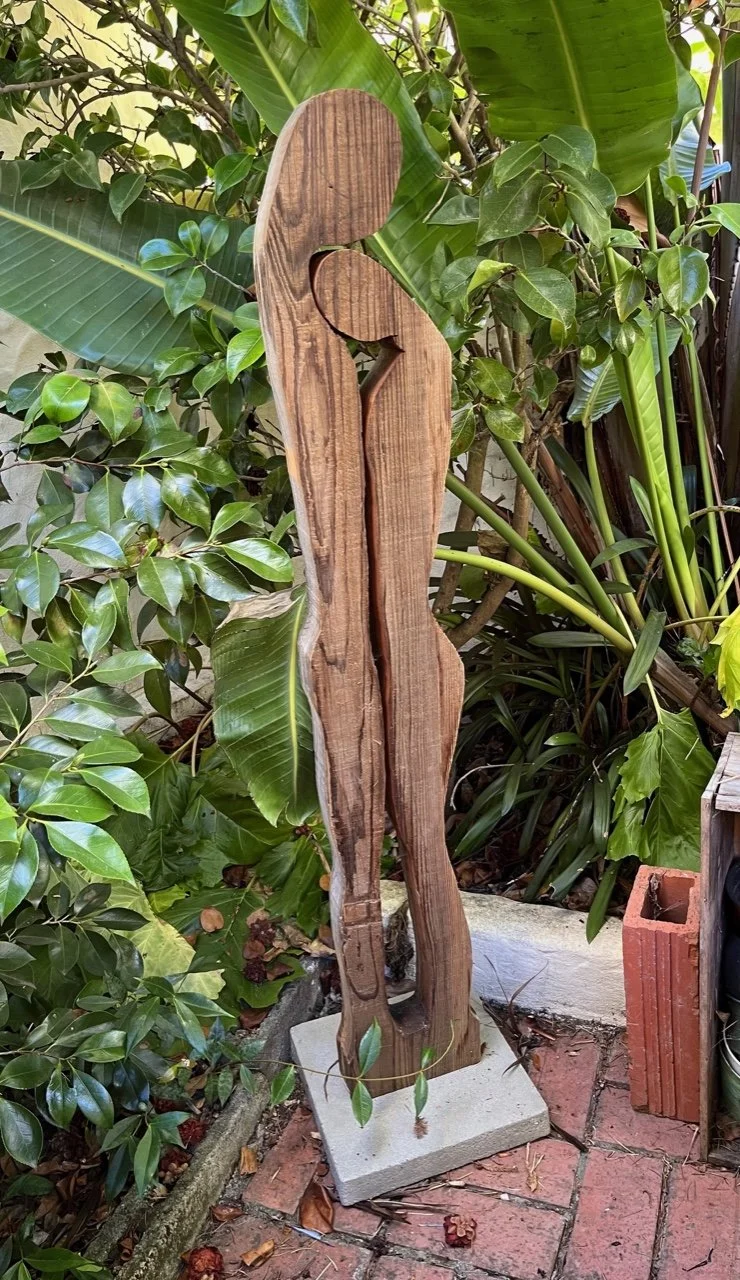
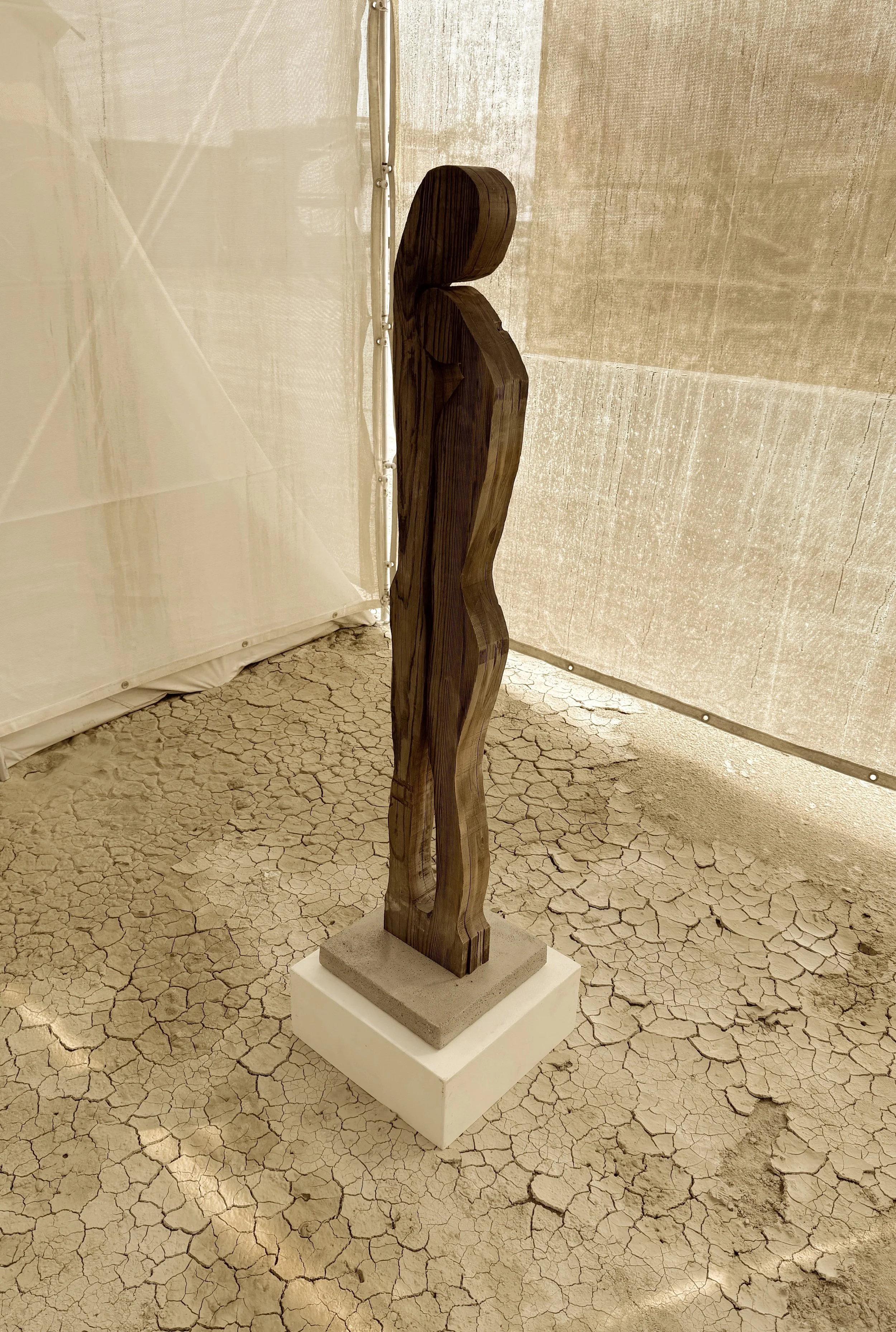
Figurative Wabi-sabi sculpture made from reclaimed wood: Together

Interior designers often use these evocative, understated figures to anchor minimalist spaces. They provide an intimate, human element without disrupting the overall calm of a room.

What is Wabi sabi art?

Wabi-sabi art is a Japanese aesthetic and artistic philosophy rooted in Zen Buddhism that centers on the acceptance of transience and imperfection. Rather than striving for perfection, symmetry, and permanence, wabi-sabi finds beauty, authenticity, and elegance in things that are imperfect, impermanent, and incomplete, inspired by nature itself.

Here are some principles of Wabi-Sabi:

  • Impermanence: Recognizing that all things are in a constant state of flux, aging, decaying, or wearing down, and that this cycle is natural and beautiful.

  • Asymmetry and Irregularity: Rejecting strict geometric symmetry in favor of organic shapes, accidental brushstrokes, and natural asymmetry.

  • Simplicity: Stripping away the unnecessary to reveal the pure essence of a material or object without clutter or pretense.

  • The Beauty of Age: Honoring the marks of time, such as patina on bronze, weathered wood grain, fading colors, or cracks.

In the art practice and process there are a few characteristics that stand out:

  • Embracing Flaws: In wabi-sabi ceramics, artists often celebrate warping, uneven glazes, rough textures, or asymmetries that happen naturally during the firing process. In wood art, the flaws come with the wood (knots, colors) and the previous use (cracks, nail holes, discoloration) becoming a beautiful element of the artwork.

  • Kintsugi (Golden Joinery): Perhaps the most famous application of this philosophy. When a ceramic bowl breaks, it is not thrown away. Instead, it is meticulously repaired with lacquer dusted or mixed with powdered gold, silver, or platinum. The fractures become glowing highlights, making the repaired object more beautiful for having been broken. Similar to this process, I have been using discarded wood pieces and use glue to laminate those pieces into larger wood blocks. When applying linseed oil these glue lines turn darker and highlight the fragmentation of the piece.

  • Natural Materials: Wabi-sabi art heavily favors unpretentious, organic materials that age gracefully over time—such as clay, raw wood, unpolished stone, rusted iron, linen, and handmade paper. In my work with reclaimed redwood, I am always amazed how aging made the wood even more beautiful. Some of the wood I am using was installed as roof rafters, wall studs, or fence boards for up to 100 years.

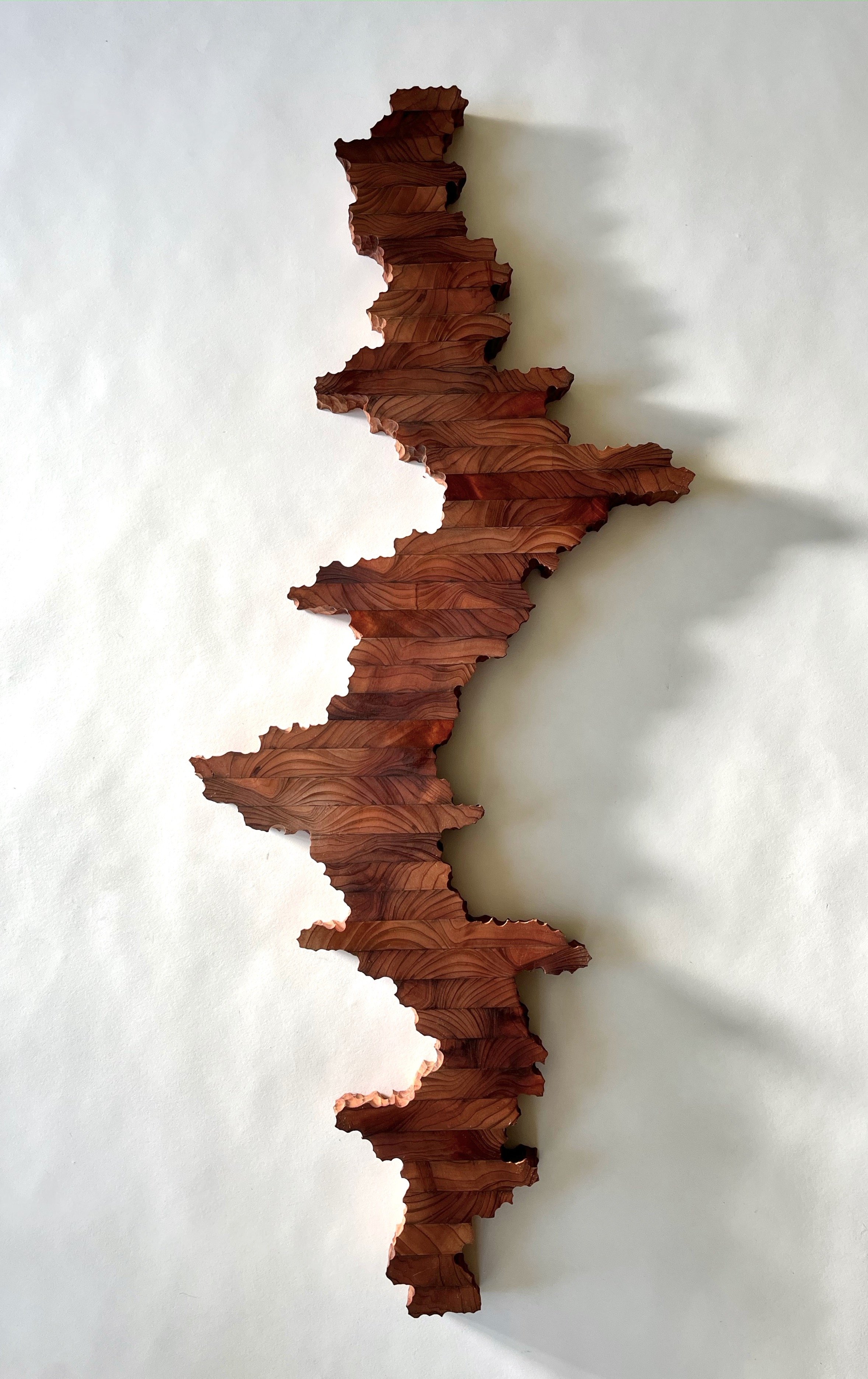
Here is a piece that is made from aged, reclaimed redwood, has an irregular shape (wood pieces and grain), embraces flaws of the wood and uses joinery (laminated wood pieces). It is called “Slice of Summer”.

Wabi-sabi wood sculpture: Slice of Summer


Sculptures at Burning Man 2025

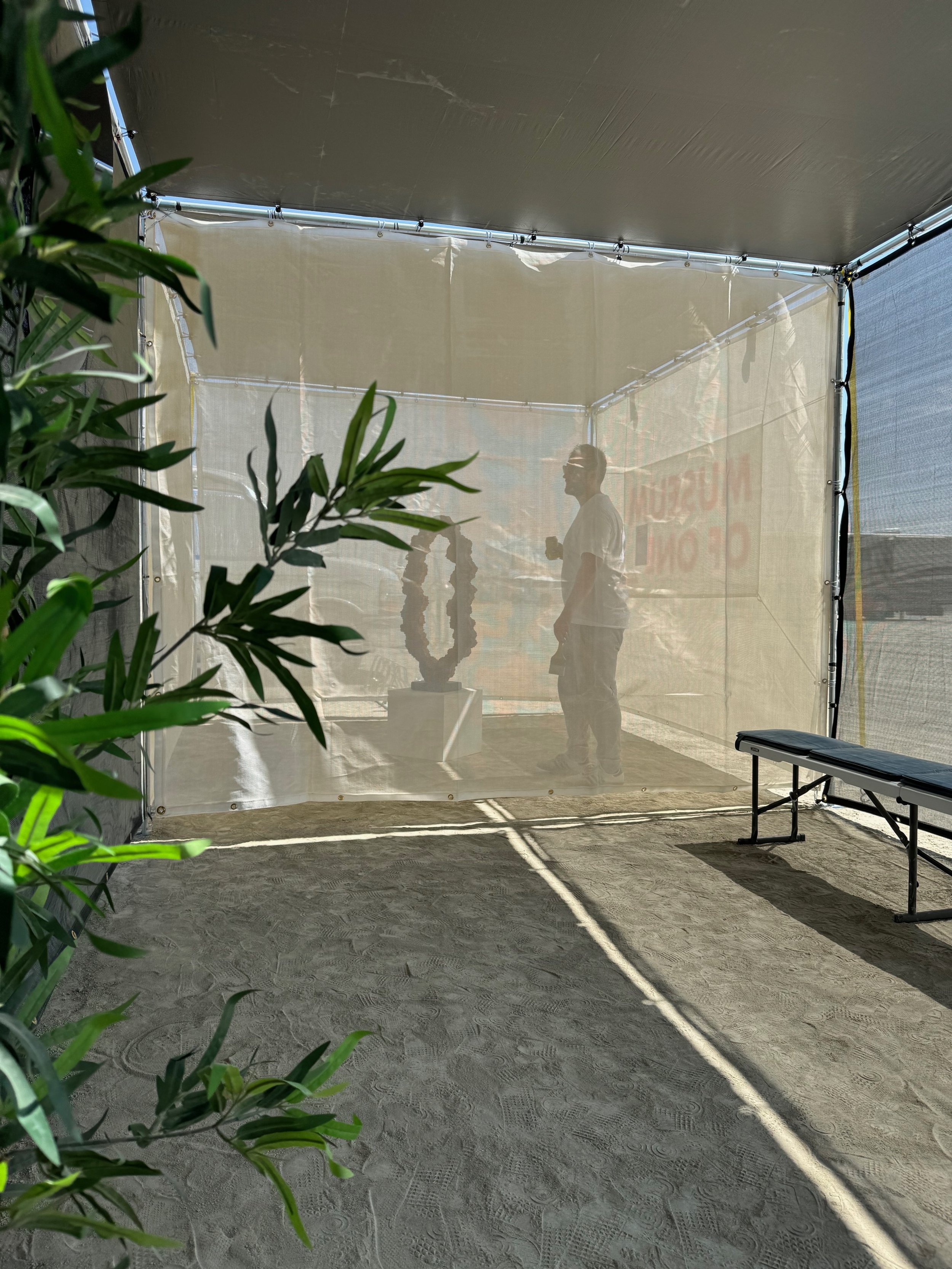
Second year in a row, one of my wood sculptures is featured at Burning Man 2025. The organizers of the “Museum of One” at Burning Man invited me to have my work “Together” as part of their curated art experience. This work was heavily inspired by Wabi-sabi with its raw finish, natural flaws, and the visible look of reclaimed wood - placed on a desert floor of raw earth and mud (That week there was a lot of rain and the earth floor was sculpted by rain and wind). Every day they showed one piece of art and then they asked the people how the art had made them feel. I really appreciate this way of presenting and experiencing art. Often, in galleries or museums you are overloaded with a large number of artwork pieces without the ability to talk or express emotions.

As an artist I feel deeply inspired and grateful by what people discover in my work, how it makes them feel and how they experience the presence of my artwork at Burning Man in Black Rock City.

Wood Sculpture "Together" at Burning Man 2025 by Lutz Hornischer

The curators of the museum had selected the sculpture “Together” because it beautifully fit into the Burner experience and playa setting. Made from four reclaimed redwood fence boards is a rough-cut silhouette of two figures embracing. The raw edges and rough surfaces keep the sculpture grounded in its original redwood material and is presented on the cracked, rough surface of the desert floor. Here are more photos of the artwork.

If you are interested in seeing even more artwork, here is my sculpture at Burning Man from last year.

North Berkeley Wealth Management Art Exhibition

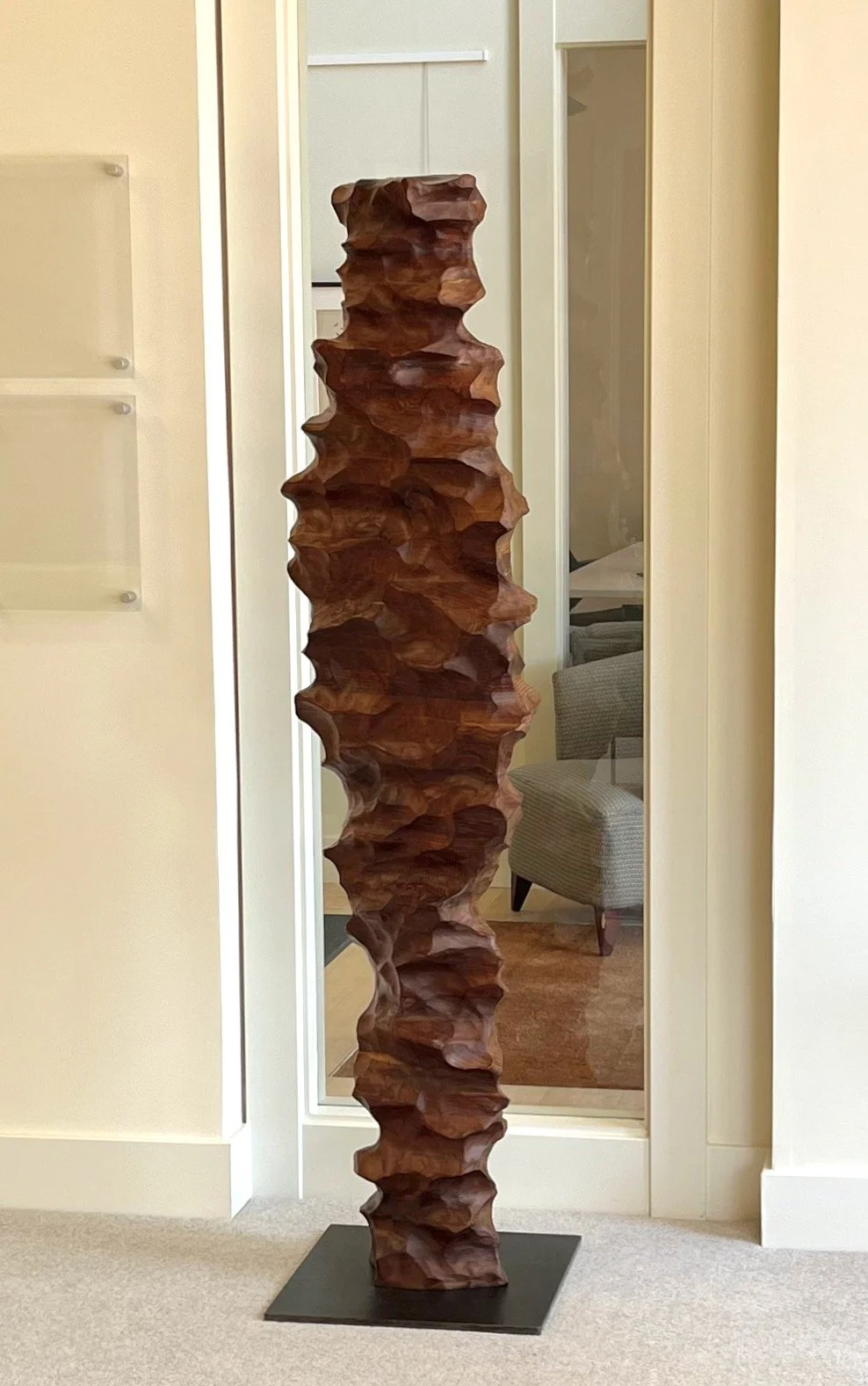
North Berkeley Wealth Management, a sustainable alternative (B-Corp) to big financial institutions, is known for supporting the local arts and has invited my to show my works “Carved by Nature III” and “8000 Years” as part of the retrospective art exhibition in Berkeley, CA. The sculptures are featured in their new beautiful office space among many other artworks from local artists. The official start of the art show is August 2025. Please check the events site of North Berkeley Wealth Management for more details and the time/date of the planned artist reception.

North Berkeley Wealth Management
1995 El Dorado Avenue, Berkeley, CA 94707

Hours: Monday – Friday, 9 a.m. – 5 p.m.

North Berkeley Wealth Management Art Exhibition - Carved by Nature IIII by Lutz Hornischer

Abstract sculpture at corporate office of North Berkeley Wealth Management

Origin of Wabi-sabi

Wabi-Sabi originated in 14th-century Japan as a philosophical and aesthetic movement rooted in Zen Buddhism. It developed as a direct cultural rebellion against the lavish, perfect, and heavily ornamented Chinese imports that dominated the ruling class's tastes at the time.

Over centuries, the philosophy evolved from two distinct concepts into a single, unified worldview. Originally, "wabi" and "sabi" had lonely, negative meanings, but they transformed over time into positive aesthetic values:

  • Wabi: Originally meant the loneliness of living in nature, away from society. It evolved to mean rustic simplicity, quiet refinement, and finding spiritual richness in solitude and voluntary poverty.

  • Sabi: Originally meant withered, lean, or chilled. It evolved to mean the beauty of aging, the grace that comes with time, and the visible patina of wear and tear.

Combined, Wabi-Sabi represents a worldview centered on the acceptance of transience and imperfection. It finds beauty in things that are imperfect, impermanent, and incomplete. To bring this philosophy into art and design, Japanese masters relied on seven core principles :

  • Fukinsei: Asymmetry, irregularity, and imbalance.

  • Kanso: Simplicity and the elimination of clutter.

  • Koko: Austerity, bareness, and the beauty of being weathered.

  • Shizen: Naturalness without pretense or artificiality.

  • Yugen: Subtle grace, depth, and hidden nuance.

  • Datsuzoku: Freedom from conventional rules or habits.

  • Seijaku: Tranquility, stillness, and quietude.

Of course, this is only a snapshot, the whole origin and history of wabi-wabi is more complex and nuanced just like everything that has evolved over hundreds or thousands of years. I will write more about Wabi-sabi and how my work relates to it in the coming months - stay tuned.

480 Lighthouse Gallery in Pacific Grove / Monterey Peninsula

Pacific Grove has welcomed an exciting new addition to its vibrant art scene:  480 Lighthouse Gallery. Spanning over 10,000 square feet, it is now the largest art gallery on the Monterey Peninsula, offering an inspiring space for both artists and art lovers.

The gallery’s beautiful, light-filled space presents paintings and sculptures in an inviting and engaging way. It strikes a perfect balance - curated like an art museum, yet never dull; fresh and modern, yet not stiff. When I stepped inside to drop off my sculpture, 9000 Years, the space immediately felt like home - for both me and my work.

At a time when many art galleries are closing, it’s incredibly encouraging to see a place like 480 Lighthouse Gallery open, aiming to bring artists and community together. If you find yourself in Pacific Grove, Monterey or Carmel, I highly recommend stopping by to experience this new unique space and support both a new gallery and the talented local artists exhibiting their work.


480 Lighthouse Gallery in Pacific Grove

Sculpture 9000 Years at 480 Lighthouse Gallery

The gallery is open Tuesday through Sunday 11am to 3pm and is located on 480 Lighthouse Avenue in Pacific Grove, only a few blocks away from my favorite coffeeshop and book store - The Bookworks.

My Artwork at Burning Man 2024

I couldn't make it to Burning Man, but one of my wood sculptures did! Friends of us organized the “Museum of One” at Burning Man and they invited me to have my work “9000 Years” as part of their curated art experience. Each day they showed just one piece of art. Before the person could enter the space, they did a ceremonial “dusting off” to create an engaging experience and increase people’s excitement. Afterwards, they interviewed the people how the art had made them feel. I really loved this way of presenting and experiencing art. Often, in galleries or museums you are overloaded with a large number of artwork pieces. Here, are some of the experiences the Burners shared:

“This is my favorite thing I have seen on the playa so far. I was rushing over here before the museum closed and then waiting for the piece to be dusted properly before I was able to see it, was one of this big relaxing release of being out of control and forced to be present. First, it was just funny and then it became kind of spiritual. And when I walked in there and saw the piece, it felt to me like relinquishing control and look for the opening, there is always an opening to move forward.”

“The anticipation was building, definitely, as I was sitting there. I know there is a lot of dust out here, and there is a lot of dusting to be done. The piece itself - I really enjoyed the intricacy of the different layers of blocks on top of each other, with the slats of the years of each ring folding into one another, and kind of the negative space in the middle giving a richness to the whole piece as one.”

As an artist I feel deeply inspired, grateful and amazed by what people see in my work, how it makes them feel and how they describe the experience of engaging with my artwork.
Museum of One at Burning Man 2024

Artwork "9000 Years" at Burning Man 2024

Abstract Wood Sculpture "9000 Years"

The curators of the museum had selected the sculpture “9000 Years” because it beautifully fit into the Burner experience and playa setting. Made from 90 pieces of ancient reclaimed redwood with very tight grain lines (100 in each piece), the sculpture represented a time travel of 9000 years of growth (90 pieces with 100 years of growth each). Here are more photos of the artwork.

Paper or Plaster? Both!

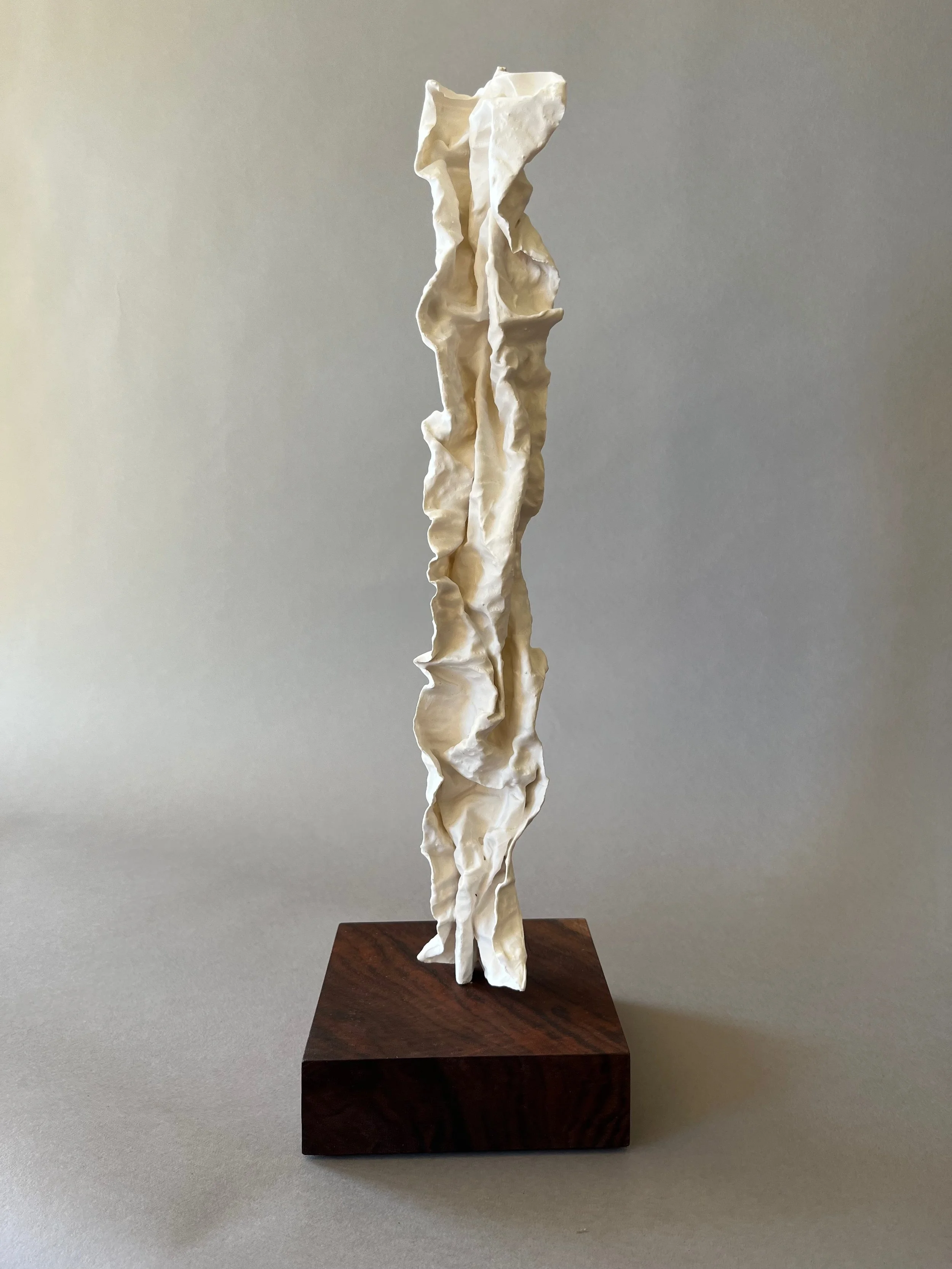
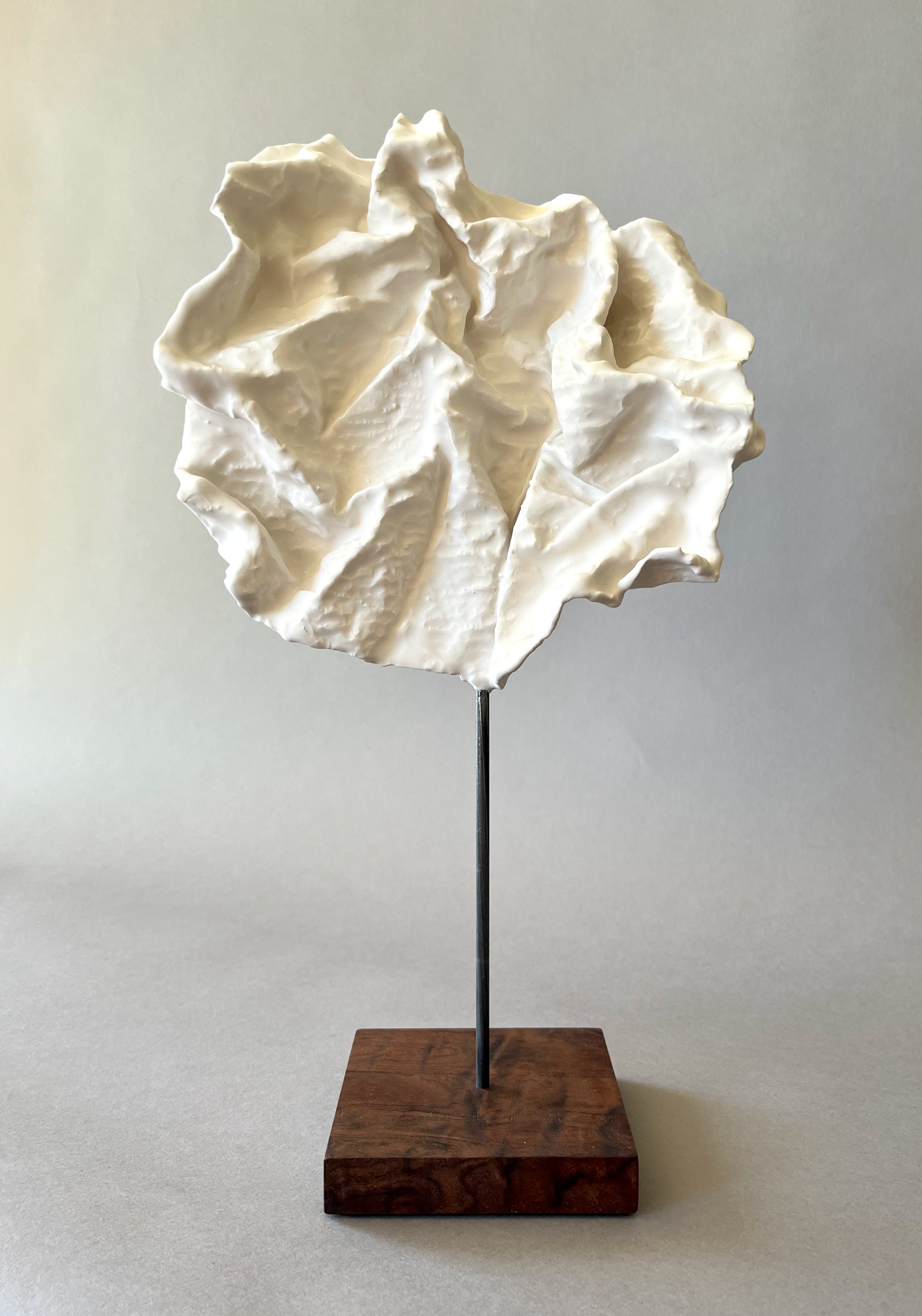
During COVID I started to make sculptures using layers of paper, trying to keep away the relentless wood dust that I produce when carving and sanding. It was challenging to make the paper stiff and maintain a nice original surface of the paper. While exploring alternatives, my past work in fresco (plaster) painting and visits to ancient sites in Italy and Greece came to mind. The elegance, flow and smoothness of ancient marble sculptures inspired me to create abstract work with similar qualities using layers of sculpted paper covered with plaster. I was intrigued by combining the thin and fragile qualities of paper with the sturdy and hard surface qualities of plaster. Making the plaster flow over the paper reminds me of my early years of making the wood “flow” through carving.

Modern Interior Design with Wall Sculptures

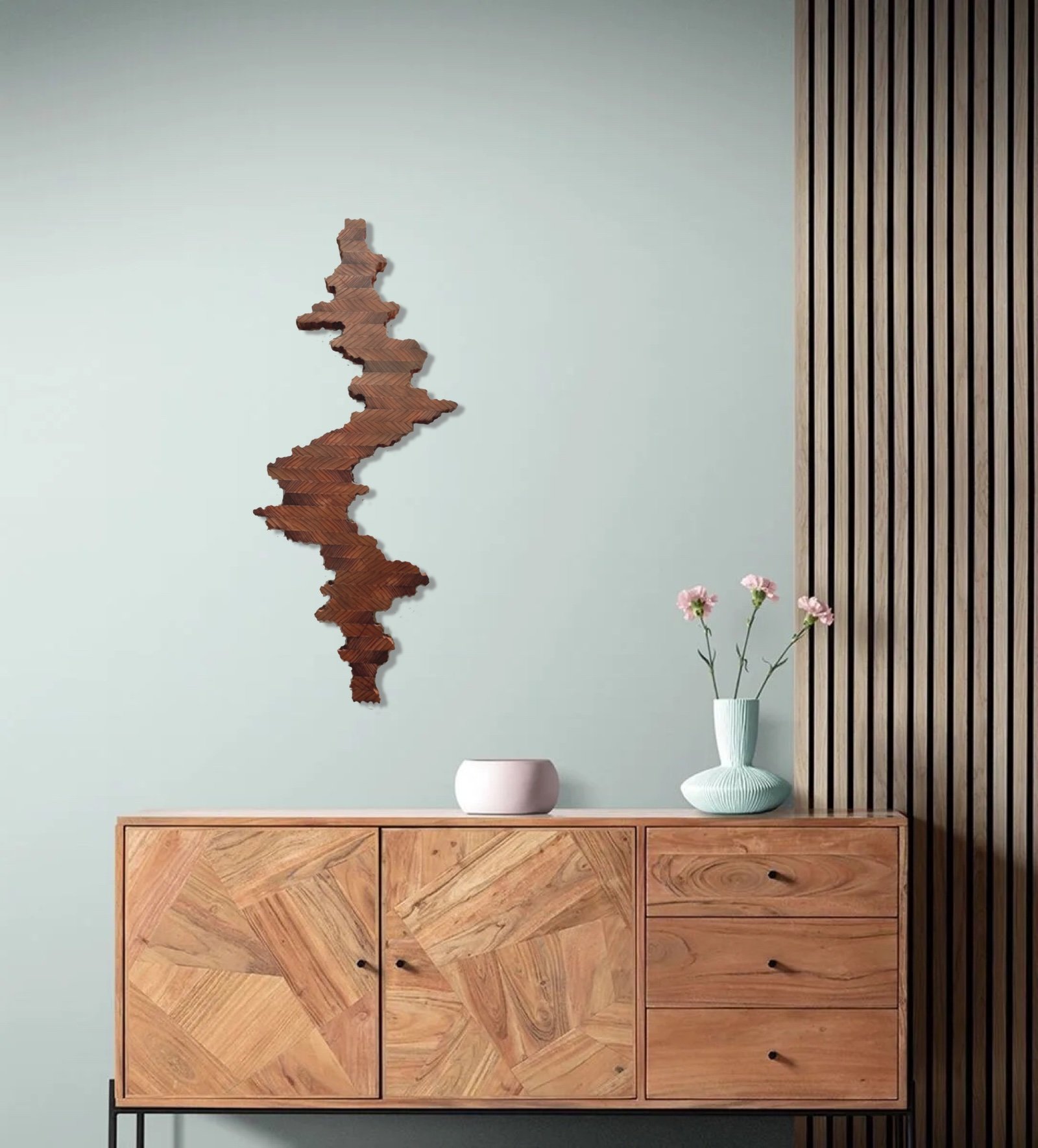
I often get asked how my work will look on a wall in a specific modern space setting, surrounded by furniture and other design elements. Usually, my work with reclaimed wood acts as a complementary element, adding warmth, natural colors and aliveness to the space. Especially my recent work below with exposed and polished end grain can radiate in a dramatic way.

The two wall sculptures below illustrate well how organic shapes and natural colors transform a space that is characterized by straight lines and rectangular shapes.

Wall sculpture in living room (Around the World, 46 x 17 x 1.5)

Wall sculpture in hallway (Adventurous Path, 37 x 16 x 1.5)

New Wall Sculptures - Slice of Summer, Adventure and more

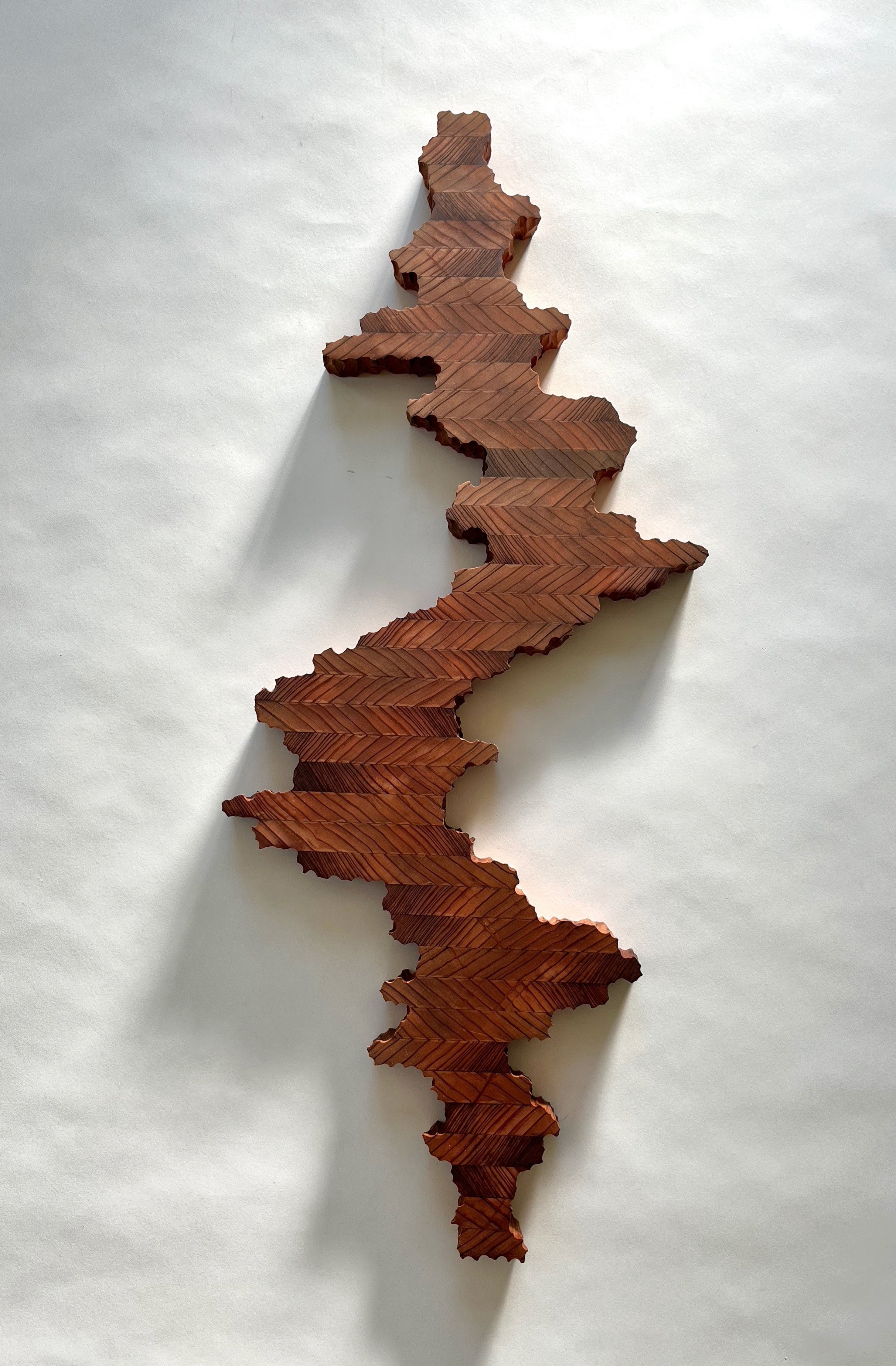
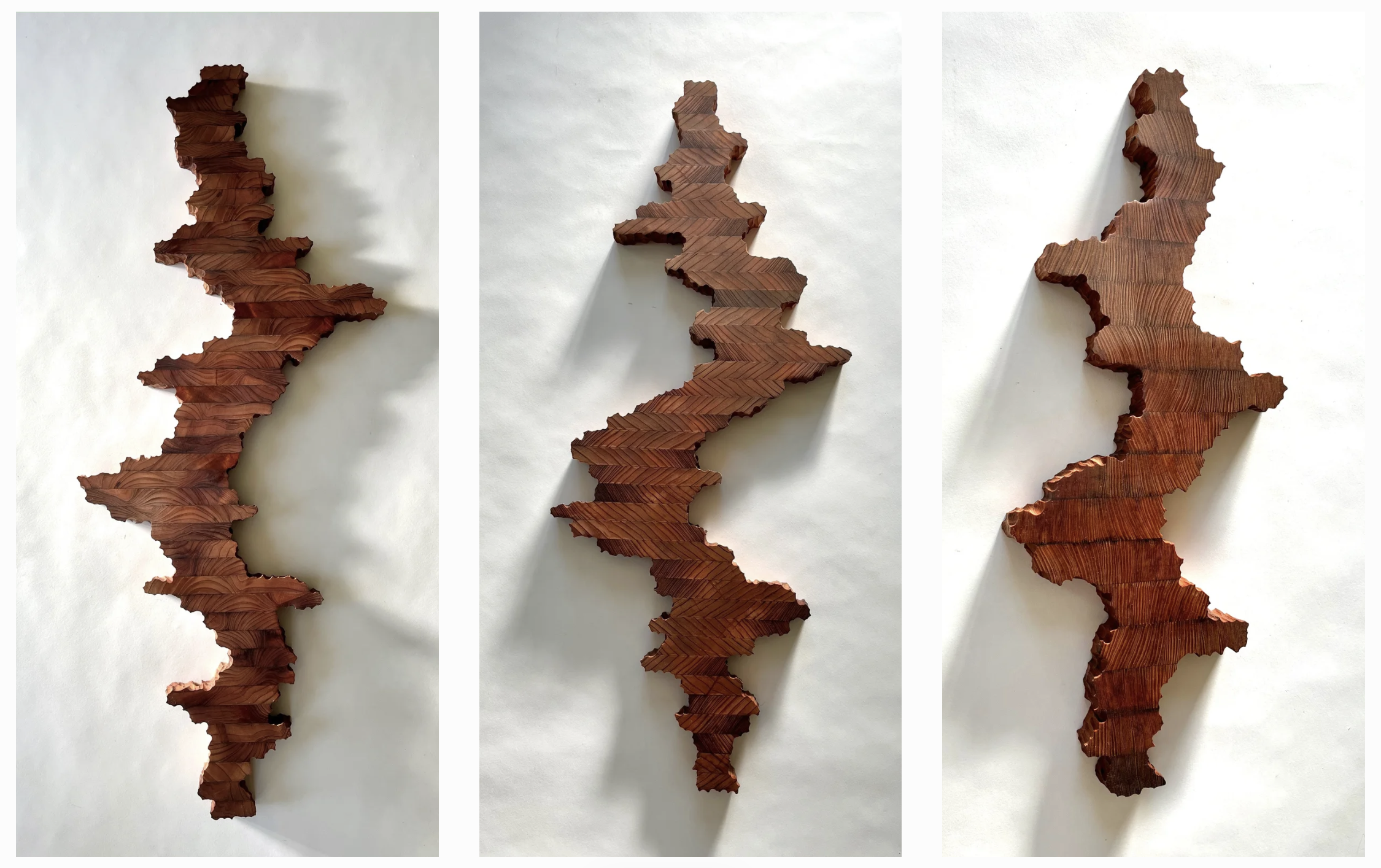
In recent months I completed a series of new wall sculptures using “slices” of wood. The wood had such beautiful end-grain lines and rich colors that made me cut the wood into slices to expose the magic. Most pieces can either be installed vertically or horizontally. Here are two of the new pieces installed vertically:

Slice of Summer - reclaimed redwood 37 x 16 x 1.5

Adventurous Path - reclaimed redwood, 37 x 16 x 1.5

This horizontal sculpture is made from 40+ thick slices of reclaimed redwood, featuring a soft and smooth surface on the top, showing the beautiful grain of the wood, and and edgy outside as an interesting contrast.

Around the World - reclaimed redwood, 17 x 46 x 1.5

For more photos and additional information go to the wall sculptures page.

Rancho Mirage Festival of the Arts 2023

I am very excited that my work was selected for the Rancho Mirage Festival of the Arts 2023. The Festival of the Arts includes a sophisticated showcase of handpicked exhibiting artists who represent various media, including glass, ceramics, textiles, photography, painting, sculpture, and digital. The festival is invitation only, and exhibiting artists are limited in the number of art installations they can display, furthering the event’s objective of providing high quality and sophistication. This event provides an unmatched opportunity to meet the creators and learn the stories behind their ideas.

Two days of artistic exploration in a beautiful outdoor setting, close to Palm Springs and Coachella Valley, and best of all - it’s free!

Date: November 4 & 5, 2023
Location: Rancho Mirage Community Park & Amphitheater, 71560 San Jacinto Drive, Rancho Mirage, CA

New plaster sculpture selected by Art for AIDS Auction in San Francisco

Flourish sculpture by Lutz Hornischer, Art for AIDS 2023, San Francisco

I am very excited that one of my new works in plaster, called “Flourish”, was selected for the upcoming Art for AIDS 2023 benefit auction. This auction benefits the UCSF Alliance Health Project and is a premiere art event held every year in San Francisco. You can enjoy and bid on artwork from about 100 Bay Area artists in a beautiful setting, enjoy good food and drinks, and meet lots of nice people.

Date: October 21, 2023
Location: UCSF Pritzker Building, 675 18th Street, San Francisco
Time: 6pm PST

Stay tuned for more details in the next weeks.


SFMOMA Design Challenge Finalist 2023

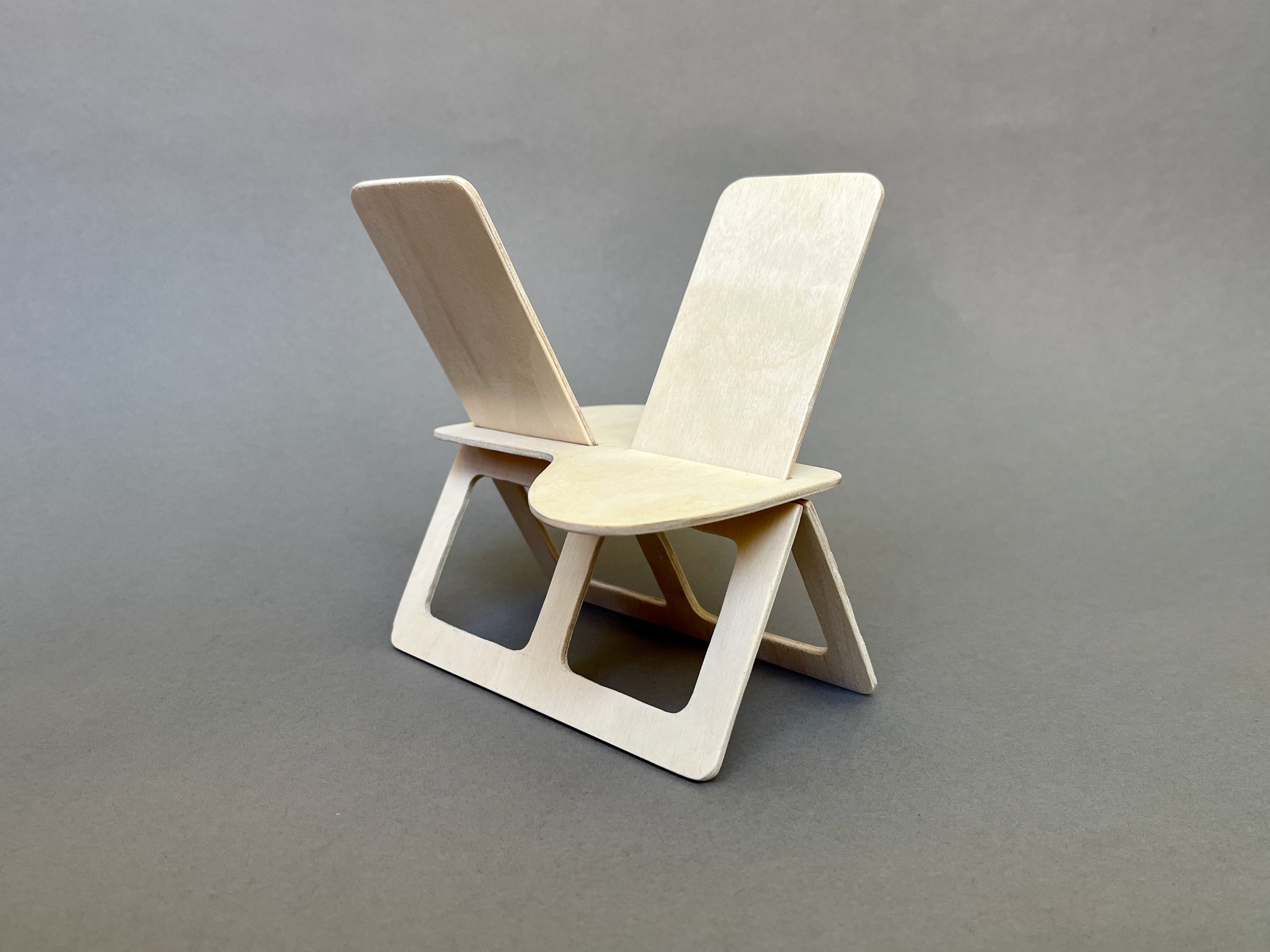
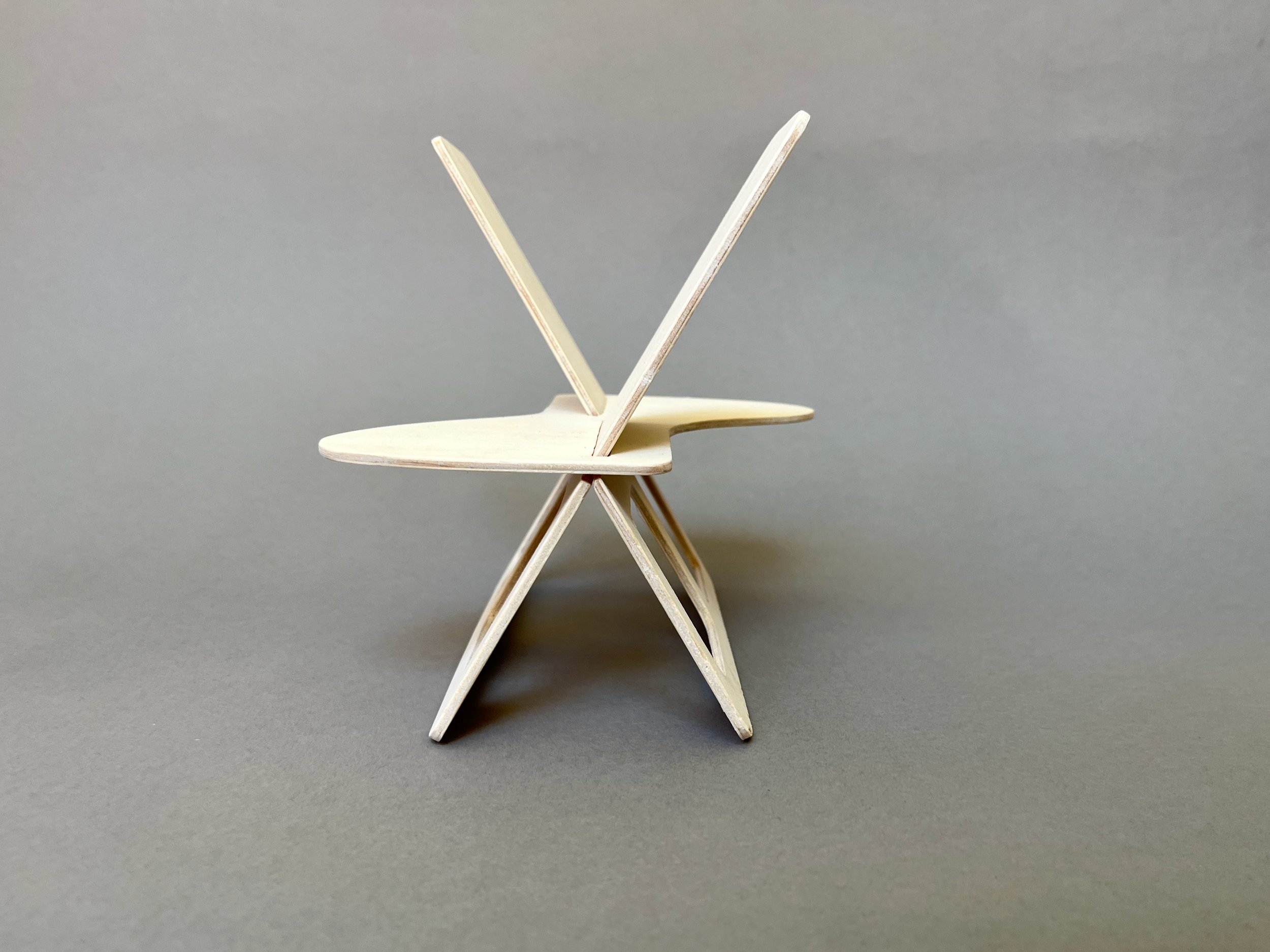
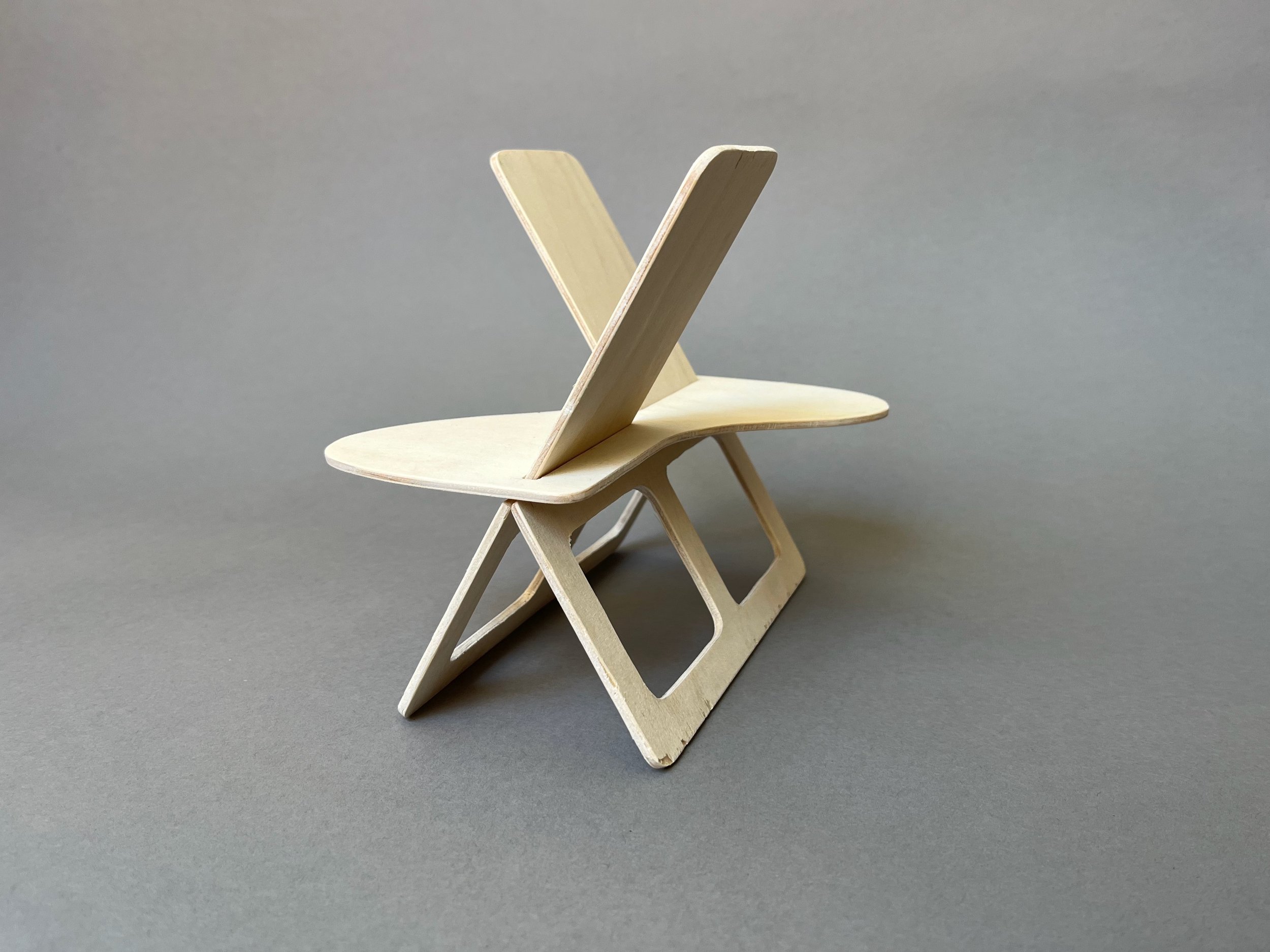
I am always interested in new ways to use recycled materials and I am very excited that SFMOMA has selected my design as a Top 10 finalist in the “Scrappy Chair Design Challenge”. SFMOMA had asked artists, designers and makers to design and fabricate a chair made from “scrap” wood pieces, such as plywood sheets and other wood pieces from a recent exhibition, emphasizing the concept of re-use, sustainability and recycling. My design goal was to use the provided materials as efficiently as possible (one sheet of recycled plywood) without the use of any additional resources (glue, screws, etc.) to maximize sustainability. The name of the chair is “Intimate Conversation” - a chair to turn towards each other and have a more intimate conversation.

For more information about the SFMOMA Design Challenge, please follow the link. Also, please see additional photos of the chair below.

Room & Board - San Francisco ArtSpan Open Studios 2022

The premier art event of the year in the San Francisco Bay Area is back - ArtSpan Open Studios. Room and Board, the modern design and furniture studio, has invited me back to show my work along with 10 other local artists in their stunning showroom in the SOMA (South of Market) neighborhood. This is a unique opportunity to discover new art, meet locals artists and experience art in beautiful room settings. Hope to see you.

Room and Board SF
685 Seventh Street,
San Francisco (SOMA)

Artist Reception: Friday, November 4, 2022 from 6 to 8pm with an art preview, wine and food.

Open Studios: Saturday, November 5 from 10am to 6pm and Sunday, November 6 from 11am to 6pm.

ArtSpan Open Studios 2022 at Room and Board San Francisco