Wabi-Sabi wood art is highly prized by designers because wood is the ultimate canvas for showing time, weathering, and nature. Wood inherently embodies the core principles of Wabi-Sabi: transience, imperfection, and organic history.
What makes wood so interesting for wabi-sabi:
Celebrates natural flaws: Instead of discarding wood with knots, deep cracks, erratic grain lines, or wormholes, artists highlight these elements as the main features.
Utilizes live edges and grain of wood: Sculptures and wall panels often keep the natural surface of the old wood, while also highlighting the grain (growth lines) of the wood.
Emphasizes aging and texture: Weathered driftwood, reclaimed barn wood, and charred wood (using the Japanese Shou Sugi Ban technique) showcase a rich patina that cannot be replicated by machines.
Here is how wabi-sabi has inspired my work with wood:
Emphasis on natural grain lines - flowy asymmetry of various grain lines, repressing the age of the wood, but also the natural beauty
Lamination of wood pieces - highlight the glue lines that brought individual wood pieces together to form the overall sculpture (similar to golden joinery of ceramic bowls)
Inclusion of imperfection like knots, cracks, nail holes and discolorations - imperfectly perfect
Finish with linseed oil to preserve natural wood colors - warmth of natural wood
Shapes inspired by nature - asymmetrical and randomly flowing
Actually the last one is the most difficult. When creating a piece our human instinct (or education) wants us to make straight lines, round circles and symmetry. Therefore, I always have to “let go” when making a piece that looks not “human made”, so it looks like found in nature, created by natural forces, such as water, wind, sun, etc.
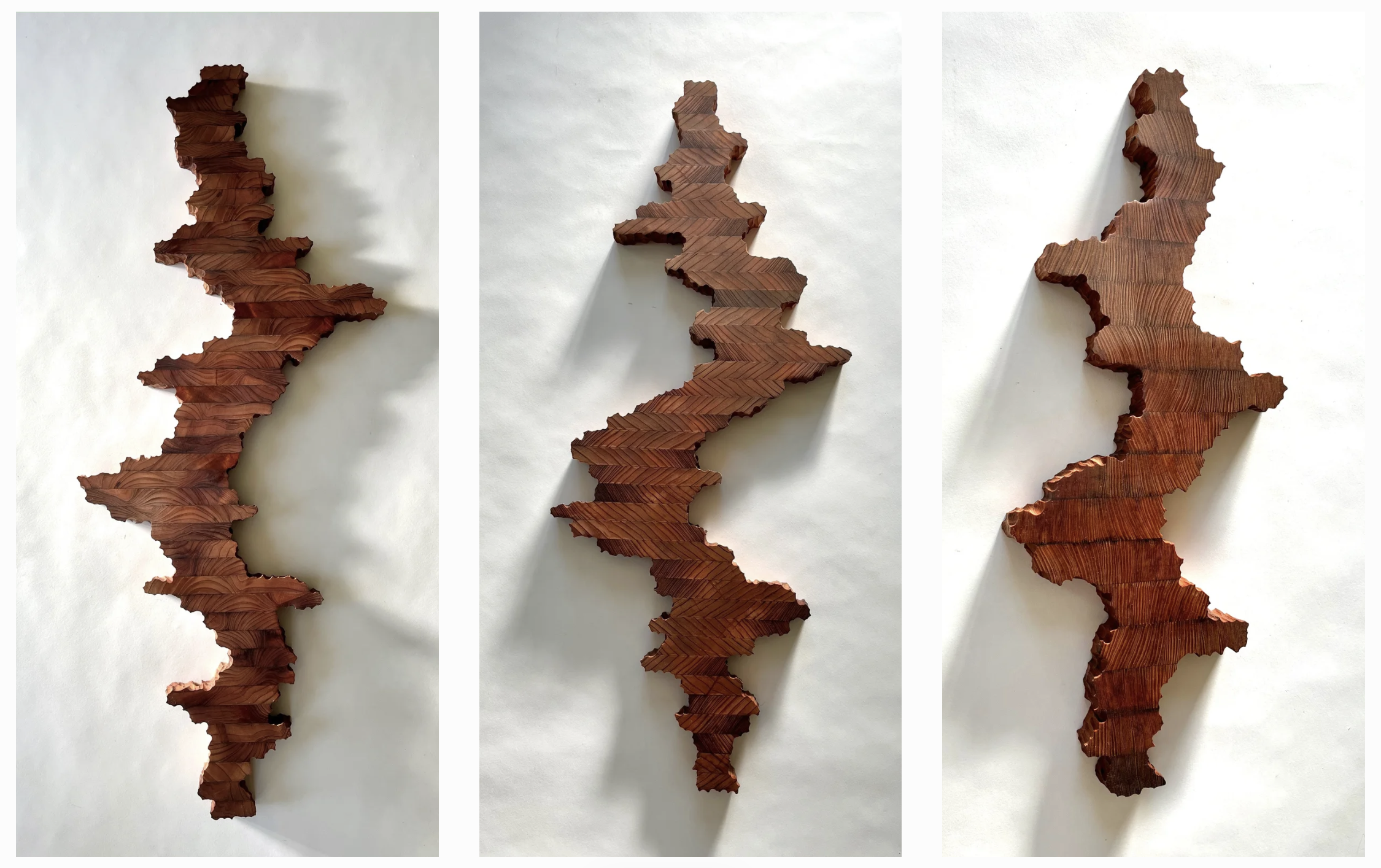
Examples of wabi-sabi sculptures using reclaimed redwood